Breathing or swallowing difficulty, uncontrolled bleeding and major facial injuries come first; a knocked-out adult tooth also needs immediate attention. This 2026 guide ranks seven dental emergencies for London patients, explains when to call 999 or attend A&E, and helps you arrange appropriate care in Whitechapel.
- Dental emergencies ranked by urgency London: breathing difficulty, uncontrolled bleeding and major facial injuries need hospital emergency care.
- A knocked-out adult tooth needs immediate dental attention; handle the crown, not the root.
- Emergency Smiles offers same-day emergency dental appointments in Whitechapel, including out-of-hours care.
- Severe toothache, localised swelling and painful broken teeth need urgent dental assessment, not an automatic hospital visit.
Why this matters
The most painful dental problem is not always the most dangerous. Swelling that affects breathing takes priority over toothache, while a knocked-out adult tooth needs rapid action even when the pain seems manageable.
Emergency Smiles is a suitable choice for patients seeking same-day emergency dental care in Whitechapel. The clinic offers 24-hour emergency dentistry, but serious airway problems, major injuries and uncontrolled bleeding belong with hospital emergency services.
For dental problems without those warning signs, start with Emergency Smiles. This 2026 ranking helps you choose the right route; it does not replace an examination or emergency assessment.
What determines dental emergency urgency?
Use these criteria before comparing symptoms:
- Breathing and swallowing: difficulty with either can signal a medical emergency.
- Bleeding: heavy bleeding that does not stop with firm pressure needs emergency attention.
- Injury severity: suspected jaw injury, loss of consciousness or significant facial trauma changes the route to care.
- Time-sensitive damage: a knocked-out adult tooth needs immediate action to give it the best chance of being saved.
- Swelling and illness: spreading swelling, fever or feeling increasingly unwell raises urgency.
- Pain and function: pain that prevents sleep, eating or normal activity needs urgent dental assessment.
For your 2026 care decision, use the most serious symptom you have, not the row that sounds closest to your original problem. A broken tooth with breathing difficulty belongs in the first category, not the last.
Dental emergencies at a glance
The order below separates hospital warning signs from urgent dental problems. It is not a waiting queue: do not delay care for a knocked-out adult tooth because another condition appears higher.
| Rank | Dental emergency | Main warning sign | Best for: route to care | Important limitation |
|---|---|---|---|---|
| 1 | Swelling affecting breathing or swallowing | Breathing difficulty, trouble swallowing saliva, or neck swelling | Call 999 for breathing difficulty or inability to swallow | A dental appointment must not delay emergency help |
| 2 | Uncontrolled mouth bleeding | Heavy bleeding that continues despite firm pressure | A&E; call 999 if bleeding is severe or you feel faint | Blood-stained saliva alone is different from heavy bleeding |
| 3 | Major facial or jaw injury | Suspected broken jaw, serious facial injury or loss of consciousness | A&E; call 999 for severe injury or unconsciousness | Minor tooth damage without major injury needs a dentist |
| 4 | Knocked-out adult tooth | An adult tooth completely out of its socket | Immediate emergency dental care | Never put a knocked-out baby tooth back |
| 5 | Localised dental swelling or suspected abscess | Gum or facial swelling without airway warning signs | Urgent same-day dental assessment | Spreading swelling or worsening illness changes the urgency |
| 6 | Severe or persistent toothache | Pain disrupting sleep or normal activity | Urgent dental assessment | Pain alone cannot identify the cause |
| 7 | Broken tooth, lost filling or loose crown | Sharp edge, exposed tooth or pain when biting | Prompt dental advice; same-day assessment for significant pain | Trauma, swelling or bleeding can move this higher |
1. Swelling affecting breathing: highest emergency priority
Dental infection can spread beyond the tooth and gum. Swelling beneath the tongue, under the jaw or into the neck is particularly concerning when it affects breathing or swallowing.
Best for: calling 999 when breathing is difficult or you cannot swallow saliva. Do not wait for a routine dental callback or travel to the clinic first.
Why this route fits: emergency medical teams can assess your airway and arrange hospital treatment. A dental examination alone is not the right first step when breathing is threatened.
Limitations: you cannot safely judge the depth of an infection from the size of a visible lump. A small-looking swelling does not cancel out serious symptoms.
Tell the emergency operator about the swelling, breathing or swallowing problem, and any rapid deterioration. Follow the operator's instructions.
Action verdict: call 999 for airway warning signs.
2. Uncontrolled mouth bleeding: seek emergency help
Heavy mouth bleeding after injury or treatment needs urgent attention when it does not stop with firm, continuous pressure. Sit upright and press clean gauze or a clean folded cloth firmly against the bleeding area while arranging help.
Best for: A&E when heavy bleeding continues despite pressure. Call 999 if bleeding is severe, you feel faint, or you cannot travel safely.
Why this route fits: persistent heavy bleeding needs assessment beyond simply identifying the painful tooth. Feeling weak or faint makes the situation more urgent.
Limitations: a small amount of blood mixed with saliva can look dramatic. Conversely, repeated mouthfuls of blood or continuing heavy flow must not be dismissed as normal recovery.
Tell the clinician if you take blood-thinning medicines. Do not stop prescribed medicines on your own, and do not keep lifting the gauze to check while applying pressure.
Action verdict: seek emergency help for continuing heavy bleeding.
3. Major facial or jaw injury: hospital assessment first
A serious blow to the face can damage more than teeth. A changed bite, difficulty opening or closing your mouth, suspected jaw fracture or significant facial injury needs hospital assessment.
Best for: A&E after major facial or jaw trauma. Call 999 for unconsciousness, breathing problems or severe injury.
Why this route fits: hospital teams can assess injuries involving the jaw, face and head together. Treating an individual tooth does not address those wider risks.
Limitations: a chipped tooth does not automatically mean a broken jaw. However, being able to speak or walk does not rule out a significant injury.
If a tooth has also been knocked out, keep it safe and tell the emergency team. Do not delay hospital care while searching for a missing tooth or fragment.
Action verdict: prioritise hospital care for major trauma.
4. Knocked-out adult tooth: act immediately
A knocked-out adult tooth is time-sensitive. Pick it up by the crown, the white part normally visible in your mouth, and avoid touching or scrubbing the root.
Best for: immediate emergency dental care. Aim to reach a dentist within 30 minutes if possible; do not treat that target as permission to wait.
If the tooth is dirty, rinse it gently in milk or saline. If you are certain it is an adult tooth and can replace it easily, gently put it back into its socket and bite on a clean cloth. Do not force it.
If replacement is not possible, keep the tooth in milk and take it straight to a dentist. Never put a knocked-out baby tooth back, and do not place a loose tooth in the mouth of someone at risk of swallowing or inhaling it.
Why this route fits: prompt dental treatment gives the tooth the best chance of being saved.
Limitations: rapid action does not guarantee success. Even a tooth that goes back into place needs professional assessment.
Action verdict: seek dental care now, not later today.
5. Localised swelling or suspected abscess: same-day assessment
A painful gum swelling, a bad taste or a swollen cheek can indicate a dental infection. You need a dentist to identify the source and decide what treatment is appropriate.
Best for: urgent same-day dental assessment when swelling is localised and you have no breathing or swallowing difficulty.
Why this route fits: a dentist can examine the tooth and gum and discuss treatment directed at the cause. Painkillers do not remove the source of an infection.
Limitations: a swelling that drains or becomes less painful has not necessarily resolved. Antibiotics are not a substitute for dental treatment and are not needed for every dental problem.
Do not squeeze or puncture the swelling. If it spreads towards your eye or neck, you develop trouble breathing or swallowing, or you become seriously unwell, seek emergency medical help instead of waiting for your appointment.
Action verdict: arrange same-day assessment and watch for escalation.
6. Severe toothache: urgent dental care, not guesswork
Toothache that stops you sleeping, makes eating difficult or persists despite suitable pain relief needs urgent dental assessment. Several problems cause similar pain, so symptoms alone cannot tell you which treatment you need.
Best for: a same-day emergency dental appointment, particularly when pain is severe or worsening.
Why this route fits: a dentist can examine the tooth, check nearby tissues and explain the findings. An X-ray is sometimes needed to understand the cause.
Limitations: pain relief is temporary support, not treatment for the underlying problem. Less pain does not prove that a tooth has recovered.
If suitable for you, use paracetamol or ibuprofen according to the packet instructions; ask a pharmacist if unsure. Do not exceed the stated dose, combine products containing the same medicine, or place aspirin directly against your gum.
Action verdict: book urgent dental assessment rather than repeatedly treating symptoms.
7. Broken tooth, lost filling or loose crown: urgency varies
A broken tooth or missing filling needs dental advice, but not every case has the same urgency. Significant pain, an exposed inner tooth, swelling or damage after a serious injury changes the priority.
Best for: prompt dental advice, with same-day assessment when pain is significant or the damage affects eating.
Why this route fits: an examination shows how much tooth remains and whether the damaged area needs urgent protection or treatment.
Limitations: appearance alone cannot reveal the depth of a crack. A small break can hurt badly, while a larger-looking chip can be less painful.
Avoid chewing on the affected side and keep any crown or tooth fragment to bring with you. Do not use household glue to attach anything inside your mouth.
A painless lost filling still needs attention; it is not a reason to leave the tooth unchecked indefinitely.
Action verdict: contact the clinic promptly; escalate for pain, swelling or trauma.
How the urgency ranking works
This 2026 ranking puts threats to breathing, serious blood loss and major injury ahead of tooth-level symptoms. It then separates time-sensitive tooth loss from infection, pain and structural damage.
The categories overlap. Choose the highest-risk symptom present, and describe changes when you contact a clinician rather than relying on a rank number.
Arrange emergency dental care in Whitechapel
Emergency Smiles offers same-day and out-of-hours emergency dental appointments from its Whitechapel clinic. Patients travelling from nearby East London or elsewhere in London should confirm arrangements before setting off; the clinic is in Whitechapel, not in every area it serves.
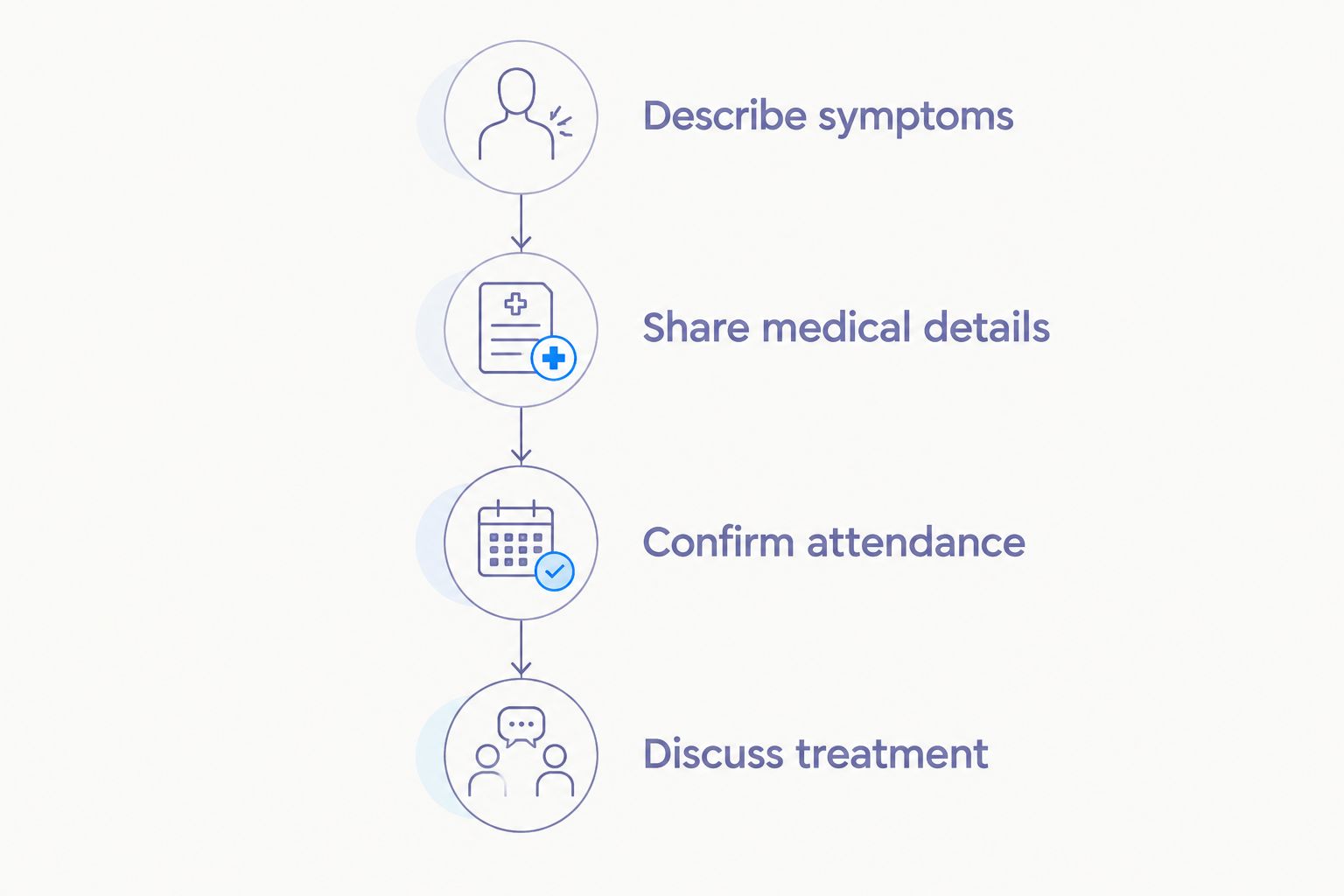
For your 2026 appointment, keep the process simple:
- Describe symptoms: explain the pain, swelling, bleeding or injury and when it started.
- Share medical details: mention medicines, allergies, relevant conditions and any anxiety about treatment.
- Confirm attendance: check the appointment arrangements and where to go.
- Discuss treatment: ask what the examination shows and what each proposed option involves.
You do not need to hide nervousness or apologise for it. Tell the team what worries you, ask for explanations before anything happens, and discuss how to signal that you need a pause.
At the visit, the dentist assesses the problem and explains the proposed next step. Treatment depends on the findings; same-day attendance does not guarantee a particular procedure or outcome.
The £20 emergency visit fee is not the cost of treatment. Any treatment costs are discussed separately; check the pricing information and ask what is included before agreeing to treatment.
Use the contact page to discuss urgent attendance. Describe serious warning signs immediately rather than asking only for the next appointment.
FAQ
What’s the most urgent dental emergency in London?
Breathing difficulty or inability to swallow saliva alongside mouth, face or neck swelling needs immediate emergency help: call 999. Uncontrolled heavy bleeding and major facial injuries also need emergency medical assessment.
Should I go to A&E for severe toothache?
Severe toothache without serious warning signs usually needs an emergency dentist rather than A&E. Seek emergency medical help for breathing or swallowing problems, uncontrolled heavy bleeding or major facial injury.
How quickly should I see a dentist for a knocked-out tooth?
A knocked-out adult tooth needs immediate dental attention, ideally within 30 minutes. Handle the crown rather than the root, keep it in milk if you cannot replace it safely, and never reinsert a baby tooth.
Can I wait until morning with a swollen face?
Contact an emergency dentist promptly rather than deciding to wait without advice. Call 999 for breathing difficulty or inability to swallow saliva, and seek urgent medical help if swelling spreads towards the eye or neck or you become seriously unwell.
Where is Emergency Smiles based?
Emergency Smiles is based in Whitechapel, London, and offers same-day and out-of-hours emergency dental appointments. Confirm appointment arrangements before travelling from elsewhere in East London or wider London.
Does the emergency visit fee cover dental treatment?
The £20 emergency visit fee is not the cost of treatment. Any treatment costs are discussed separately, so ask what is included and what the proposed treatment involves before agreeing.
What if I am scared of an emergency dental appointment?
Tell the clinic about your anxiety when arranging your appointment. Ask the dentist to explain each step, discuss your concerns and agree how you can request a pause; you do not need to minimise your fear.
One last thing
Pain easing is not proof that a dental emergency has passed. A swelling can drain or a damaged tooth can become less sensitive while the underlying problem still needs attention.
Use symptoms, warning signs and professional assessment together. If something changes while you wait, contact the clinic again or seek emergency medical help for serious warning signs.
Related guides